Here are some of that presentations. Take a look!!
Friday, 30 May 2008
Project Meeting in Corvo - 26th 30th May 2008
Here are some of that presentations. Take a look!!
Publicada por
Deolinda Estêvão
em
30.5.08
0
comentários
Tuesday, 13 May 2008
Portuguese Tongue twisters

O rato roeu a rolha da garrafa do rei da Rússia.
Mariana - five years old
E-book
http://e-livros.clube-de-leituras.pt/elivro.php?id=travalinguas
Publicada por
Natividade
em
13.5.08
0
comentários
Tuesday, 8 April 2008
April Activities - Tongue Twisters
Tongue Twisters from Turkey
- bu köşe yaz köşesi şu köşe kış köşesi ortada su şişesi
This side is summer side, that side is winter side, the water bottle is in the middle.
- bir berber bir berbere bre berber gel beraber bir berber dükkanı açalım demiş
One barber said to another barber, ""Come on, brother, let's open a barbershop together!""
- bu ekşi eski ekşi
This sour (lemon) is an old sour (lemon).
- bu yogurdu sarımsaklasak da mı saklasak sarımsaklamasak da mı saklasak
Should we put this yoghurt away after adding garlic to it, or before adding garlic to it?
- kartal kalkar dal sarkar. Dal sarkar kartal kalkar.
The eagle stands, the branch sticks out. The branch sticks out, the eagle stands.
- bu duvarı badanalamalı mı yoksa badanalamamalı mı?
Should we whitewash this wall or should we not whitewash it?
---------------------------------------------------------------------------
Tongue Twisters from Slovakia
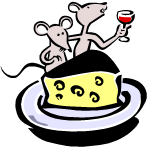
V našej peci myši pištia, v našej peci psík spí.
In our oven mice squeak, in our oven a dog sleeps.
Koleso, koleso okolesilo si sa. Železo, železo oželezilo si sa. 
Wheel, wheel, it is wheeled. Iron, iron, it is ironed.
Išli krty na maškrty, prvý, druhý, tretí, štvrtý. Piaty robil na nič vrty, nevzali ho na maškrty.
The moles went to feast. The first, the second, the third, the fourth. The fifth did a mess, so they didn't take him to feast.
aby prišli vaši k našim,
ak neprídu vaši k našim,
tak neprídu naši k vašim.
Our (people) send me to your (people), in order that your (people) come to our (people), if your (people) won't come to our (people), then our (people) won´t come to your (people).
Vyskočil vyskočil, Vyskočilku preskočil.
Vyskočilka vyskočila, Vyskočila preskočila.
Jumper (name) jumped and jumps over his wife. His wife also jumped and jumped over him.

Guľôčka v jamôčke.
A little ball in a little hole
--------------------------------------------------------------------------------
Portuguese Tongue twisters
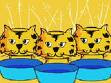
Um tigre, dois tigres, três tigres. (Quickly).Três tristes tigres trituram três pratos de trigo.
Three sad tigers triturate three wheat plates of wheat.
Três tigres tristes para três pratos de trigo.Três pratos de trigo para três tigres tristes.
Three sad tigers for three plates of wheat. Three plates of wheat for three sad tigers.
Se cá nevasse, fazia-se cá ski.Cá nunca neva.
If it snowed here, we would ski. (But) it never snows here.
O rato roeu a rolha da garrafa do rei da Rússia.
The mouse gnawed the cork of the bottle of the king of Russia.
O rato roeu a rolha da garrafa de rum do rei da Rússia.
The mouse gnawed the cork of the bottle of rum of the king of Russia.
O rato roeu a roupa do rei de Roma.
The mouse gnawed the clothes of the king of Rome.
O rato roer roía e, a Rosa Rita Ramalho, do rato a roer se ria!
The mouse gnawed and, Rosa Rita Ramalho, laughed at the mouse that was gnawing.
O tempo pergunta ao tempo quanto tempo o tempo tem. O tempo responde ao tempo que o tempo tem tanto tempo quanto tempo o tempo tem.
Time asks time how much time the time has. Time answers time that time has as much time as time time has.
A aranha arranha a rã, a rã arranha a aranha.
The spider scratches the frog, the frog scratches the spider.
A pia pinga, o pinto pia, pinga a pia, pia o pinto, o pinto perto da pia, a pia perto do pinto.
The sink drips, the young chicken chirps, drips the sink, chirps the young chicken, the young chicken close to the sink, the sink close to the young chicken.
O Papa papa o papo do pato.
The Pope eats the duck's crop.
Daniela nº2 and Maria nº7
Publicada por
Natividade
em
8.4.08
0
comentários
Jogo da Corrida de Sacos - The Bags Race Game

Number of Participants: two or more
The children put themselves inside bags and run.
Wins the first who arrives to the finishing line.
EB 2/3 de Medas
Publicada por
Natividade
em
8.4.08
0
comentários
Playground Games

André - Cimo de Vila -1ºano
Jogo da Tracção com Corda - The Traction Game with a lined Rope
Number of Participants: 2 teams with the same players’ number
Maria - 9º D
On a plain playground two equal teams (number and strength) hold the rope at the same distance from the handkerchief. Mark one line on the soil between both teams. The game consists in pulling the rope, each team to each side.
Wins the one that pulls and drags the first player to cross the line on the floor. If one team falls down or releases the rope the other team wins.
O Jogo da corrente
O jogo da corrente é jogado pelo número de jogadores que quisermos.
Joga-se assim: um jogador deve tentar apanhar todos os outros e formar uma corrente. O último jogador a ficar solto ganha.
Raquel Silva
EB1 Cimo de Vila - 4ºano
Jogo da batata quente
Este jogo joga-se com uma bola e faz-se de conta que a bola está muito quente e passa-se para outro menino e outro também tem que fazer de conta que está muito quente e passá-la novamente.
Pode jogar toda a gente.
Perde o jogo quem estiver muito tempo com a bola na mão ou a deixar cair.
Este jogo é giro e engraçado.
Mariana Sofia Rocha
EB1 Cimo de Vila - 3ºano
No recreio brinco a várias coisas mas o meu preferido é o jogo das pipocas que a professora de ginástica ensinou ao primeiro e ao segundo ano.
A canção é esta:
Uma pipoca saltava da panela
E logo outra se foi juntar a ela
Daqui a nada é uma grande confusão
Todas as pipocas saltavam no fogão
E antes de começar a cantar damos as mãos a formar uma roda.
Esse jogo é muito divertido.
Beatriz Gonçalves
EB1 Cimo de Vila - 2ºano
Eu brinco com a Cátia Felicidade, com a Eduarda e com a Sílvia. Brincamos aos pais e às mães. A Cátia é a irmã mais velha, a Eduarda é a do meio, a Sílvia é mais nova do que a Eduarda, e eu sou a bebé.
Também brincamos ao pica-gelo, que é uma menina a apanhar os outros que têm que fugir.
No jogo do trabalho das árvores, cada menino tem que ter uma árvore e há um lobo e ele tem que nos vir apanhar e nós temos que ir para a nossas árvores.
Às vezes também brincamos às escondidinhas.
Eu gosto de brincar.
Beatriz Critina Silva - 1º ano
Adriana Silva
EB1 Cimo de Vila - 2ºano
Publicada por
Natividade
em
8.4.08
0
comentários
Jogo do Pião - The Top Game

Diogo 9ºD
Number of Participants: two or more participants.
We can circle the top with a rope and we throw it onto the floor.
EB 2/3 de Medas
Publicada por
Natividade
em
8.4.08
0
comentários
Jogo da Malha - The Mesh Game

Number of Participants: 2 teams (2 players each)
Put the bolts on a plain playground in the same direction (in about 15/18 meters’ distance between each other). Each team puts itself behind the bolt. Teams play by turns. The main goal is to drop or to place the dish the nearest to the bolt throwing it only with one hand.
Punctuation: 6 points each drop; 3 points for the nearest dish.
Wins the team that achieves 30 points. 3 parts compose the game; to win one team shall win 2 of the 3 parts.
EB 2/3 de Medas
Publicada por
Natividade
em
8.4.08
0
comentários
Jogo da Macaca - Monkey game


Daniela 9ºD
Jogo da Macaca
Monkey Game
Number of Participants: 6 to 12 players
With a piece of chalk we draw the female monkey on the ground. Then we throw the stone on the drawing in the first “house”. We jump with one foot on this drawing. We have to jump on the drawing where the stone is. We collect the stone and step on all the other “houses”.
Whenever you miss the target when throwing the stone you are out of the game.
EB 2/3 de Medas
A macaca
Na macaca podem brincar os jogadores que quiserem, não há número certo.
A macaca joga-se assim: Primeiro desenha-se a macaca no chão com giz. Depois o jogador que estiver a jogar atira a pedra para o primeiro quadrado e depois salta para os outros, mas não pode calcar o quadrado no qual está a pedra. Se calcar esse quadrado, perde e tem de dar a vez ao outro menino que está a seguir.
Quando um dos jogadores chegar ao último quadrado da macaca, ganha e acaba o jogo.
Diana Isabel Silva
EB1 Cimo de Vila - Melres
Publicada por
Natividade
em
8.4.08
0
comentários
Sunday, 9 March 2008
March Activities - Playground Games

White, Blue, Red
Number of players: 3
Instruments: skipping – rope
Every player has colour (white, blue or red).
Two players turn whit skipping – rope and they repeat names of colours.
One of the players skips over skipping – rope.
The next player is going to skip, if his colour isn’t skipped.
Red and Black
It’s fun for children and teacher, too. Teacher is the leader of the game.
Children are divided into teams: Red team and black team.
Teams stand on the line back to back. ( look at the picture)
Teacher commands: ”Now, red team is chasing!” – red team chase black team
and black team can rescue only in black team’s house.
If red team overtake somebody, he remains in their team. Game repeats.
Teacher can design chasing team.
Houses
Two pupils create house and the third pupil is inhabitant of the house. ( look at the picture)
Houses stand in all the playground. Teacher commands: ”One”- house change
”Two”- inhabitants change
”Three”- houses and inhabitants change.
Children must change for command. ____________________________________________
Playground games from Corvo
The Rope Game
Great warm up/lesson activity – children really enjoy this one – keeps everyone moving and paying attention all the time – great team game – good for coordination – works with whole class – suitable from Yr1 upResources: 2 long skipping ropes – 2x2 short ones tied together work just as well
Some cones/markers (optional)
Arrange the Teams:
Divide class into two teams
Within teams, children get into pairs
Arrange teams, cones and skipping ropes as below
How to play:
The first pair run forward and grab their skipping rope, one at each end.
They drag it along the ground so that the rest of the team have to jump over it one pair at a time.
When the last pair has jumped over the rope, the pair dragging the rope pull it taught, at shoulder height, and run it back over the heads of their team-mates who simultaneously now crouch below the rope.
The pair with the rope return it to it’s original position, tag the next pair and then join the back of the line.
Keep going until all have had one or two turns – winners first team to all complete agreed number of turns, return rope to start and all sit down quietly.

Cat and Mouse
Children sit in circle with two objects which can be called 'cat and 'mouse'. The mouse is passed around the circle and when halfway, the cat is sent around to catch the mouse. Cat can also change direction, in which case the mouse should try to stay opposite the cat in the circle. Catch
One child closes his/her eyes and counts to 40 while others hide (hence the name 40-40). This child stands at the 'can' while counting. After s/he catches a person, the catcher brings that person back to the 'can', where they have to wait. However, another child who is not caught can 'free' the children in the 'can' by touching them while saying '40-40, I free all'. The child who 'frees all' (when all but himself/herself are caught) will be the catcher for the next game. Mother May I?
The object of the game is for each of the children to try to touch the leader. The leader decides how each child progresses by saying, for example 'Laura, do a tomato' and Laura has to 'do' a tomato. The things to 'do' are: 'a tomato' (step backwards) 'a baby step' (small step) or 'a giant step' (big step) 'a umbrella' (turn around until leader says stop) 'a train' (say choo choo and go forward until leader says stop) (children should also make up new moves for themselves). Before the child does anything, the child must say 'Mother May I' and get a 'yes you may' reply.
Benchball
Benchball is played with 5 people on each team. One player is the catcher who stands on a bench . The object of the game is to throw the ball to your catcher and if he catches it , your team gets a point. Red Light, Green Light, One, Two, Three
One person (the leader) stands facing a wall. Group of children stand 10 metres behind at 'the start'. The leader calls out 'Red Light, Green Light, One, Two, Three' and jumps around. During this time, the rest of the children try to run up and touch the leader. However, if the leader sees anyone move when s/he turns around, then that person has to return to 'the start'. The child who touches the leader first becomes the leader for the next game.
Publicada por
Deolinda Estêvão
em
9.3.08
0
comentários
Thursday, 28 February 2008
Wednesday, 27 February 2008
Carnival in Medas
Viva os palhaços,
Viva o Carnaval,
Viva a alegria,
Que ninguém faz mal.
(bis)
Tá - tá - tá - tá
Tá - tá - tá - tá
Tá - tá - tá - tá - tá - tá
Tá - ta - tá - tá
Tá - tá - tá - tá
Tá - tá - tá - tá - tá
(bis)
Publicada por
Natividade
em
27.2.08
0
comentários
Faithful John - story
http://www.faithfuljohn.com/flash/story/en
Friar John, without worries
Once upon a time the king heard about a friar who was known as someone who never worried about anything. One day, he decided he was going to put him into trouble and told him that he had to answer three questions:
1-Houw much does the moon weigh?
2-How much water has the sea got?
3-What do I think?
If he couldn’t answer these questions, he would be killed. Friar John went home and met the miller on the way and he asked him why he was so worried. He said he had to answer three questions in three days and if he couldn’t answer them, the king would kill him. The miller told him: “don’t worry; I will go to the king’s presence and I will answer your questions.” And so he did. Disguised as Friar John we went to the king’s presence. So the king asked him:
1-How much does the moon away?
He told him that the moon couldn’t weigh more than a pound as everybody said that it had four quarters.
“It’s true.” Said the king. “And now, how much water has the sea got?”
“That’s easy to answer”, said the miller, “but as your majesty only wants to know the water of the sea, it’s necessary first to stop all the rivers from flowing into the sea.”
The king thought he gave a good answer, but seeing Friar John was escaping the difficulties of his questions, he asked angrily:
- “Now, if you don’t know what I think, I’ll have you killed!” The miller answered:
- “Well, your Majesty thinks you are talking to Friar John without worries, but you are just talking to his miller.
He dropped his Capuchin friar and the king was amazed at his smartness.
9º A
Publicada por
Natividade
em
27.2.08
0
comentários
Brementown Musicians - story
Brementown Musicians
http://www.brementownmusicians.com/flash/story
Publicada por
Natividade
em
27.2.08
0
comentários
Monday, 25 February 2008
Febrary Activities
Which are the best known children Songs in your country?Some resources:
In the zoo

Which Portuguese children's song do you prefer?
Publicada por
Natividade
em
25.2.08
0
comentários
Children's Song
Blonde Parrot
Blonde Parrot
Of the golden beak
Take this letter for me
To my boyfriend
He is not a priest
Nor a married man
He's a single boy
Pretty as a field
Pretty as a field
Pretty as the hills
Take this letter for me
Blonde parrot
Blonde Parrot
Of the golden beak
Take this letter
To the other side
To the other side
To the other place
Blonde parrot
With beautiful feathers.
Publicada por
Deolinda Estêvão
em
25.2.08
0
comentários
Portuguese children's song
Indo eu a caminho de Viseu
I'm going on my way to Viseu.
I am going, I am going
On my way to Viseu
I'am going, I'm going
On my way toViseu
I met my love
Oh, Jesus, there I go !
I met my love
Oh, Jesus, there I go!
Now truz, truz (clap, clap, clap)
Now tráz, tráz, tráz
Now come forward, come forward, come forward
Now, go backward
Publicada por
Natividade
em
25.2.08
0
comentários
O balão do João - John's balloon
Portuguese children's song
João's balloon
Goes up in the sky
The little boy is singing happily
But the wind is blowing and
Takes the balloon
Through the air
So João begins crying
Publicada por
Natividade
em
25.2.08
0
comentários
Saturday, 29 December 2007
January activities
Fairy Tales

Goldilocks and the three bears
Jack and the beanstalk
Slovak National Story
"About 12 Months"Azorean Stories
The kingdom of Atlantis

In the great civilizations of antiquity it was said that beyond Hercules' Columns, nowadays known as Gibraltar’s Strait, laid the domains of the powerful kingdom of the Atlantes.
That empire was formed by one federation of ten kingdoms, under Poseidon’s protection, which explains their irreprehensible behaviour. They didn’t allow themselves to be influenced by vice or luxury.
Atlantis was a lovely dream place. The land supplied precious wood; they had mines with precious metals; thriving agriculture benefited from the exceptional climate; the houses and palaces displayed comfort and wealth; they had superb roads and bridges. This good easy life made possible the emergence of new artists and wise men.
Everyone wanted to enjoy and make the best out of their kingdom's wealth, even though they never forgot to practise the art of war.
It was easy for the Atlantes to protect their land from those who wanted to defeat the prodigious Atlantis. They succeeded doing so in such a degree that they started to be driven by pride and eagerness to extend their domains.
The mighty army of Atlantis spread out into the known world and ruled all nations.
The greatest atlantes army grown up for every known world dominating all the people. Blinded by triumph, they let the gods down by falling into a life of luxury and corruption where pride and vanity took over.
Zeus organised a council with all the gods to punish the Atlantes. There were major earthquakes, skies were as dark as night, fire ravished the forests, the sea overflew and swallowed villages and cities.
Atlantis and all its prosperity were forever lost in the greatness of the sea, but nine of the higher mountains of that beautiful land remained above the sea. Many years later, those small islands, the only remains of what used to be a great continent, were colonized. Nowadays they can be found in the nine Azorean Islands. Their excellent climate and breathtaking sights still remind us of the prosperity of the lost Atlantis.
In, Ângela Furtado Brum (recolha e arranjo de textos), Açores: Lendas e Outras Histórias, Jornal de Cultura, 1994. p. 16.
9th grade translation
THE MAN AND THE GIANT
Once upon a time, a man found a giant which terribly frightened him. He immediately started to devise a way to escape from him. When the giant was close enough to hear him, the man stared at the sky and inquired: - Are you coming or not? Are you coming or not? After hearing that the giant asked: - Who were you talking to? The man answered: - There was an ox here and I kicked him really hard. He flew across the skies and I am still waiting for him to come down. The giant wondered: This man is definitely stronger than me! I don’t want to have anything to do with him. By doing so, the man managed to beat the giant using only his brains and quick thinking.
In, Ângela Furtado Brum (recolha e arranjos de textos), Contos Tradicionais Açorianos, João Azevedo Editor, Ponta Delgada,2003. p. 194.
Translation: Filipe R. and Jorge L. - 6th grade
THE STOLEN PIGLET
Once upon a time, there was a man, his wife and their little baby. One day he stole a piglet and when he realised that they were carrying a search in all the houses to find the piglet, he said to his wife: - Take the baby with you and go to your mother’s place. She did so. He remained there and decided to put the piglet in the baby’s cradle hiding him inside the blankets. The local men arrived in a short while and found the man cradling a baby and singing: - Nanim, nanim, nanim, I really wish your mummy was here! Everyone there thought that he was singing to his son and wanted his wife there to take care of their little baby. They left the man alone without the slightest suspicion. Nevertheless, what the man really wanted was the piglet’s mum since she was bigger and fatter.
In, Ângela Furtado Brum (recolha e arranjos de textos), Contos Tradicionais Açorianos, João Azevedo Editor, Ponta Delgada, 2003. p. 191.
Translation: Ana Rita Cardoso e Joana Patrício, 9th grade
----------------------------------------------------------
Martinlongo School
The legend of the enchanted Moorish
It is told that in the old castle of Alcoutim lived a Moorish princess, that after having being left by her parents was enchanted, guarding a treasure.
To disenchant the Moorish and keep the treasure, it is necessary to face a monster.
Near the castle there are two holm-oaks, with the trunks eaten by time and it is there that the Moorish and the monster are.
Who wants to disenchant the Moorish princess, will have to go near to the holm-oaks, on the seventeenth of March, at midnight, face the monster with cold steels. It will only be possible to defeat the monster, if the cold steel is stuck in a black stain on his head.
It is said that up to today nobody managed to defeat the monster, to disenchant the Moorish and to keep the treasure.
--------------------------------------------------------
From Turkey
CAT AND THE LIVER

After the Hodja got the recipe for liver from his friend, he bought again some liver and because he liked it very much, he wanted to eat it often. But everytime when he brought livers he couldn't eat it, because his wife said that the cat took the liver and fled away. One day the Hodja became angry and said: “Woman, I brought liver! Where is it?” “Oh”, said his wife. “The silly cat took it and fled away.” At the same time the cat was in the room. The Hodja caught it, brought a steelyard and weighted the cat. Then he said: “That is exactly two kilos. And the liver which I brought was also two kilos. Now tell me: If that is the liver where is my cat, if that is the cat, then I want my liver.”
A FORTY YEAR OLD WINE
One day, a neighbour said to the Hodja: Have you a wine that is forty years old? Yes I have, replied the Hodja. Can you give me a little, asked the neighbor. “If I gave a little to everybody asking for it”, said the Hodja, “It would not be forty years old!”
Publicada por
Deolinda Estêvão
em
29.12.07
1 comentários